


Project FortiCloud - Building a Secure and Compliant Multi-Tenant Platform on GCP | Pienomial
Executive Summary
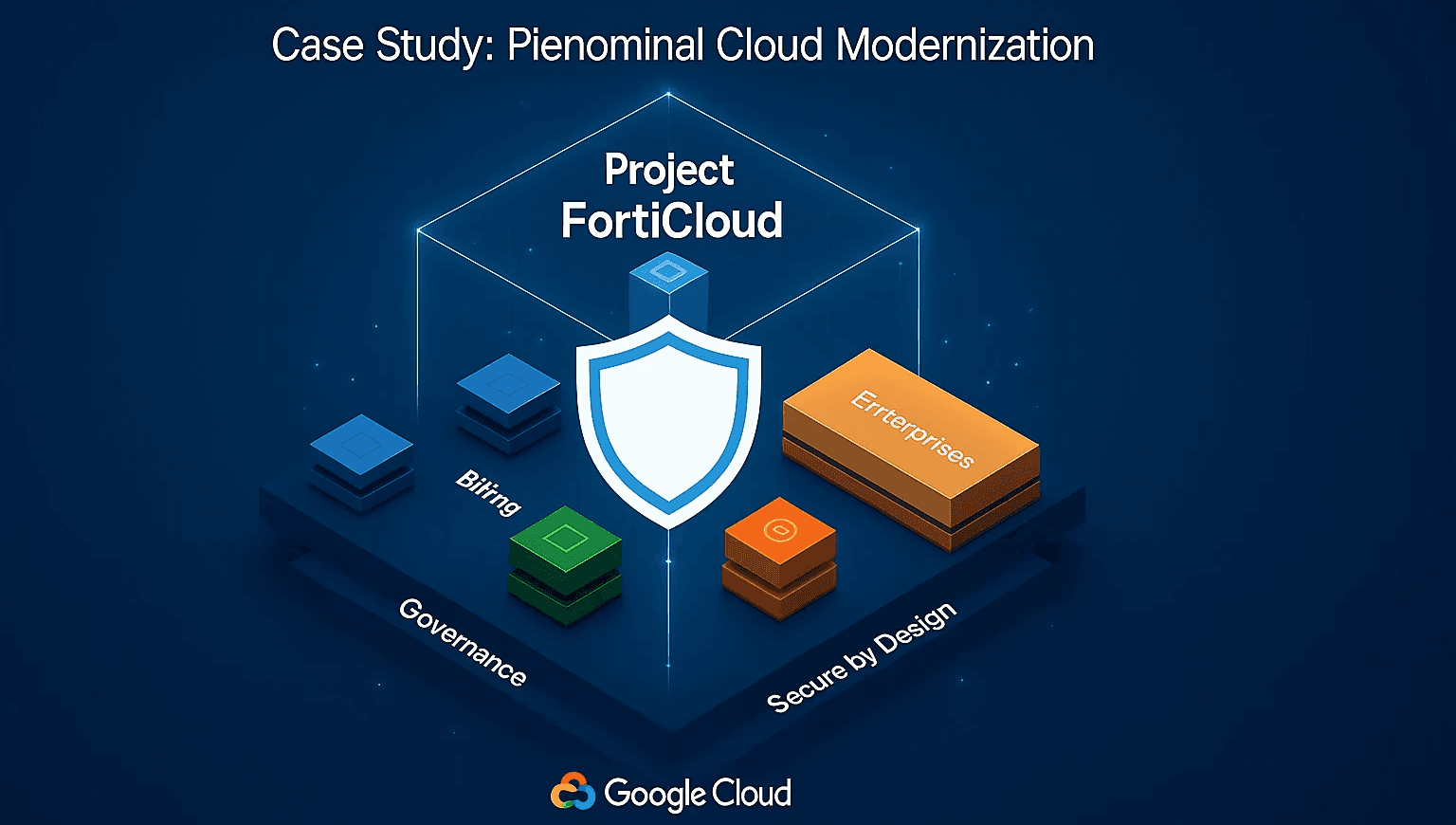
Pienomial, a rapidly expanding SaaS platform utilizing a complex microservices architecture, faced critical challenges regarding cloud governance, SOC 2 compliance readiness, and enterprise scalability due to public exposure of key workloads. The resulting Project FortiCloud transformation successfully re-architected their entire infrastructure onto Google Cloud Platform (GCP) using a secure-by-design, zero-trust approach. By implementing full Infrastructure-as-Code (IaC) automation, centralized governance, and environmental segregation, Pienomial achieved 100% elimination of public exposure and SOC 2 audit readiness ahead of schedule, resulting in 95% faster provisioning and positioning the company for accelerated enterprise growth.
The Challenge & Goals
Stakeholders
This project directly impacted the DevOps, Security, and Platform Engineering teams responsible for compliance, infrastructure operations, and service reliability.
Key Challenges
Security Risk: Public exposure of critical workloads and databases.
Governance Gap: Lack of consistent role-based access control and governance mechanisms.
Audit Complexity: Staging and production environments were mixed, significantly complicating audits and separation of duties.
Delivery Bottlenecks: Manual configuration processes were slow and error-prone, slowing down delivery.
Compliance Barrier: Significant gaps in compliance readiness for crucial enterprise contracts.
Strategic Goals
Compliance: Achieve SOC 2 audit readiness and eliminate all public exposures of internal resources.
Security Framework: Implement centralized security and compliance frameworks across all environments.
Isolation: Establish clear environmental separation (production, staging, dedicated customer environments).
Automation: Automate all deployments to ensure consistency, speed, and traceability.
Scalability: Build a scalable foundation designed for enterprise-grade multi-tenancy.
Business Drivers & Project Objectives
The transformation was driven by three primary business imperatives:
Driver | Description |
|---|---|
Security | Design a zero-trust infrastructure eliminating external vulnerabilities and minimizing the attack surface. |
Compliance | Align infrastructure and processes with SOC 2 Trust Principles—Security, Availability, and Confidentiality. |
Scalability | Support simultaneous rapid growth and sophisticated multi-tenant architecture accommodating both shared and dedicated customer environments. |
Operational Efficiency | Enable automated provisioning and consistent deployment processes through IaC. |
Governance | Introduce organization-wide policies and strictly controlled access management. |
Strategy: Research & Planning
An in-depth security and efficiency audit of the existing cloud environment revealed multiple risks and inefficiencies that necessitated a full re-architecture.
Audit Findings
Several critical workloads and databases were publicly exposed.
Shared environments caused compliance and operational conflicts.
No centralized monitoring or audit logging was uniformly implemented.
Permissions were granted broadly without appropriate governance or least-privilege review.
Decision
The project team decided to re-architect the environment with a governed, private, and compliant cloud structure by implementing multi-tenant segregation, least-privilege access control, and full automation through Infrastructure-as-Code (IaC).
Implementation Roadmap
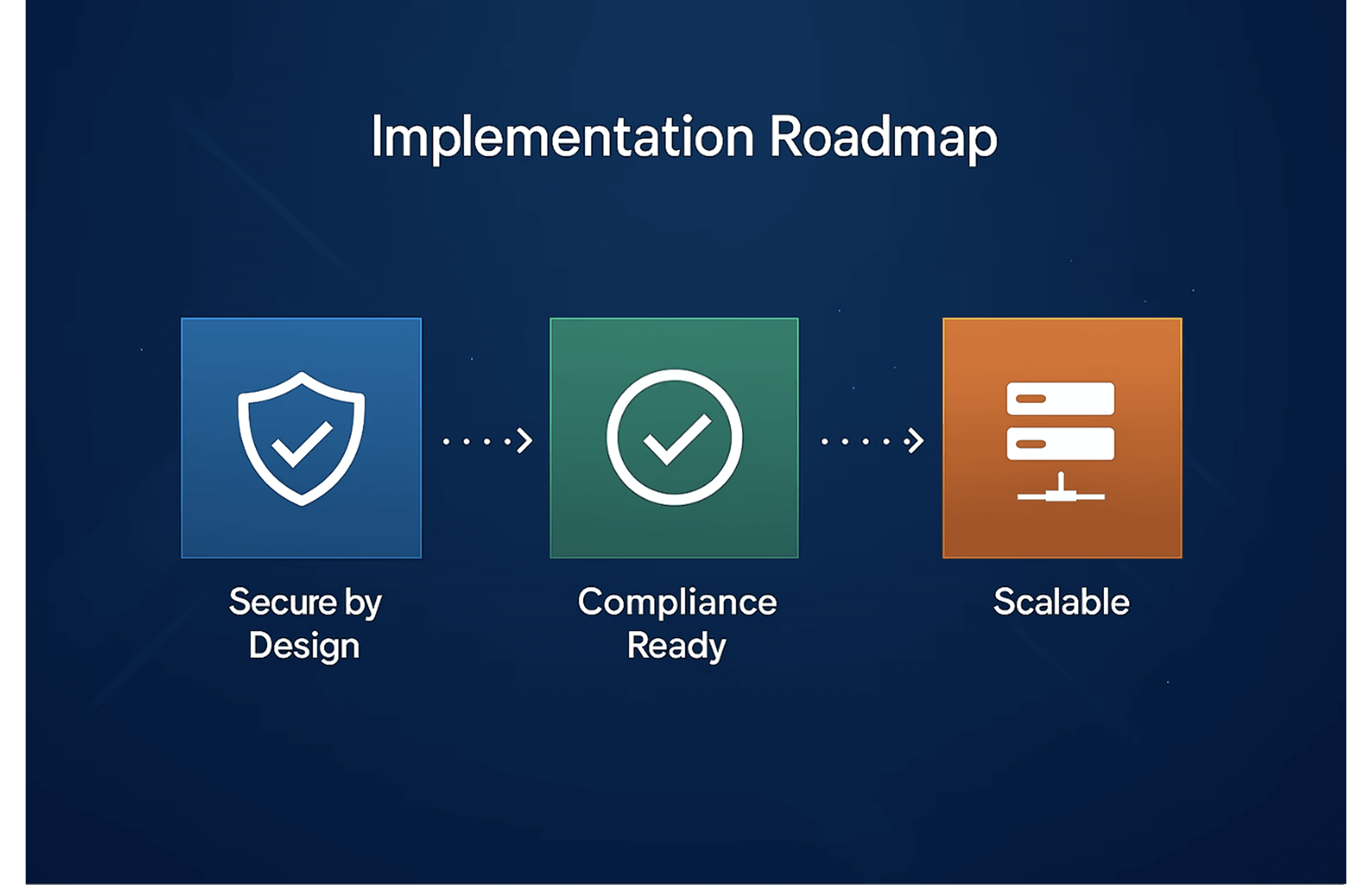
The project was executed in three concurrent tracks:
1. Secure by Design
All workloads migrated to private VPC networks with no public endpoints.
Encryption enforced for all data in transit and at rest.
IAM policies redesigned for strict least-privilege access.
Centralized identity and access controls integrated with monitoring systems.
2. Compliance Ready
Implemented Security Command Center for continuous compliance validation and threat detection.
Enabled centralized logging, monitoring, and detailed audit trails for accountability.
Automated policy enforcement to maintain continuous SOC 2 standards.
Structured environments for production, staging, and granular customer isolation.
3. Scalable and Governed
Designed a multi-tenant architecture supporting both shared and dedicated enterprise customers.
Introduced organization-level hierarchy for robust access segmentation and resource isolation.
Automated environment provisioning using Terraform Infrastructure-as-Code (IaC).
Standardized CI/CD pipelines for consistent, repeatable, and secure deployments.
Impact & Results
|
7. Key Takeaways
Pienomial successfully built a secure, compliant, and enterprise-ready multi-tenant architecture on GCP.
Achieved SOC 2 compliance readiness through automated controls and audit visibility.
Eliminated all public exposure risks while simultaneously improving operational efficiency.
Delivered a governed, scalable environment supporting rapid business growth and contract attainment.
Established a repeatable IaC framework for all future compliance-driven projects.
8. Tech Stack & Services Used
Google Cloud Services: Compute Engine, Cloud Storage, IAM, VPC Networking, Security Command Center, Cloud Logging, Cloud Monitoring, Cloud Build
Tools: Terraform (IaC), Cloud Console, Cloud Audit Logs, CI/CD Pipelines
Environments: Development, Staging, Production, Enterprise (Dedicated Customer)
9. Conclusion
The Pienomial Cloud Modernization Project (FortiCloud) successfully transformed the company’s infrastructure into a secure, compliant, and scalable foundation on Google Cloud. By embedding security, automation, and governance at every layer, Pienomial not only achieved SOC 2 compliance readiness but also positioned itself for sustained enterprise growth and accelerated customer onboarding.