


Multi-Application CI/CD Automation from AWS to GCP | BigYellowFish
Executive Summary
BigYellowFish, a technology organization managing 12 independent applications on legacy AWS infrastructure, faced mounting operational costs, deployment coordination issues, and high-risk manual rollback procedures.
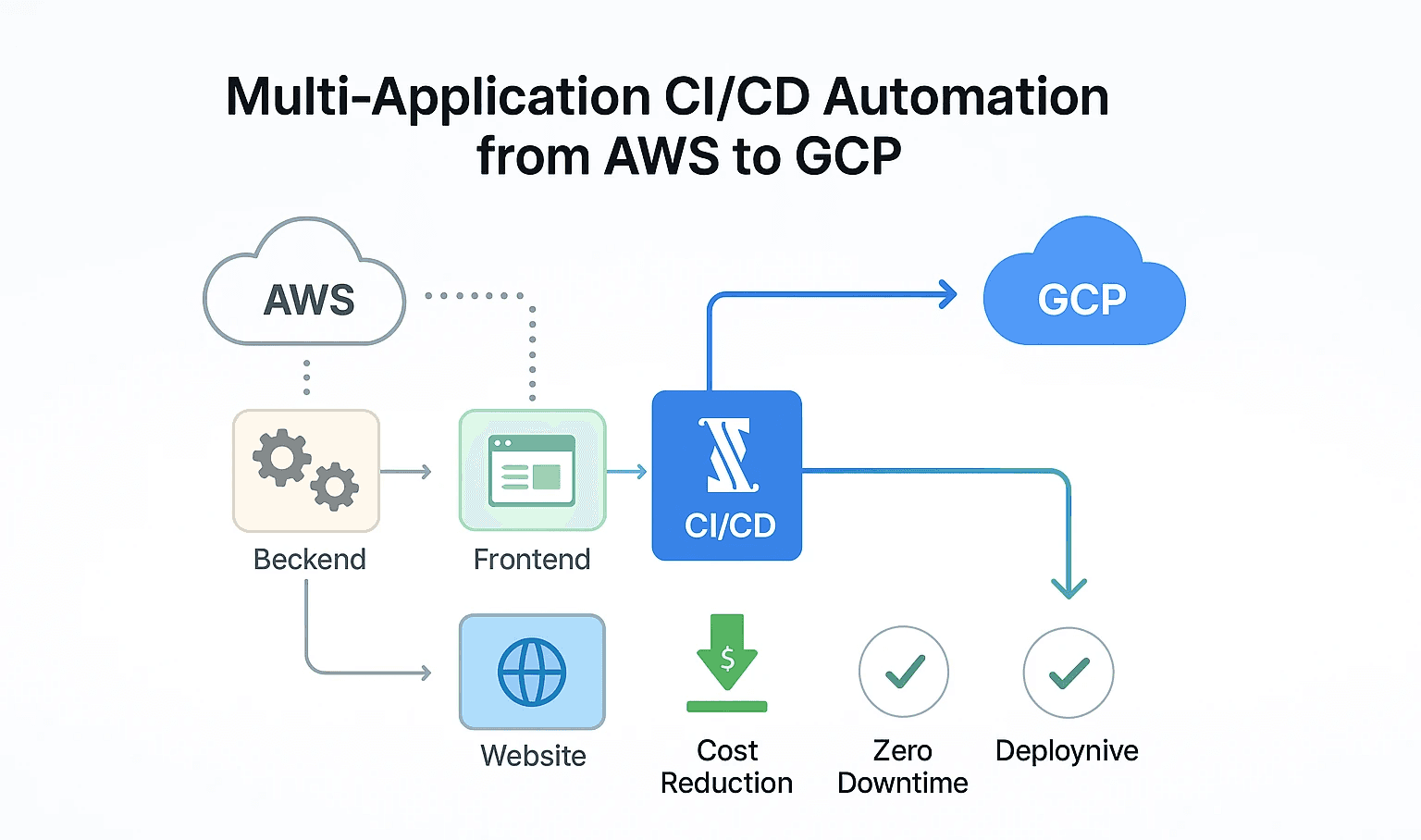
To address these challenges, we executed a complete CI/CD migration to Google Cloud Platform (GCP). The solution established a unified, automated framework featuring smart build orchestration, GCS-based health monitoring, and integrated automated rollback mechanisms.
The Client: BigYellowFish
BigYellowFish is a technology organization operating a complex, multi-tier application ecosystem, essential for its core business functions. Their application suite included:
Backend: 9 independent REST APIs
Frontend: 2 client-facing applications
Website: 1 public-facing portal
The Challenge
The organization’s existing infrastructure, built on AWS-native services (CodeBuild, EC2 Auto Scaling, CodePipeline), faced increasing operational friction that threatened efficiency and cost control.
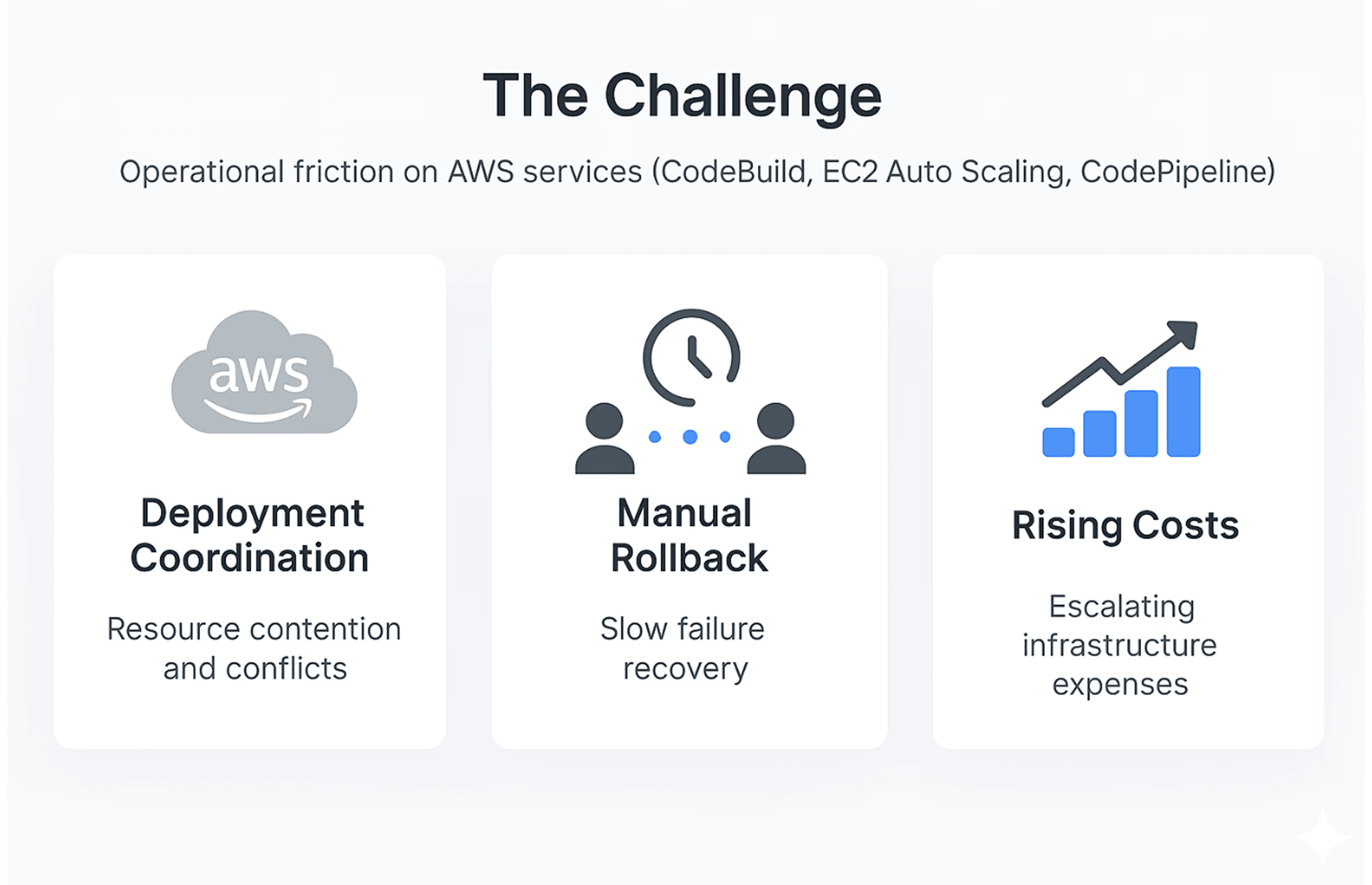
The primary challenges were:
Deployment Coordination: Difficulty coordinating simultaneous deployments across 12 independent applications, leading to potential resource contention and conflicts.
Manual Rollback: Reliance on manual processes for failure recovery, increasing mean time to recovery (MTTR) and operational risk.
Rising Costs: Escalating operational costs associated with the existing architecture and manual overhead.
BigYellowFish sought to migrate to Google Cloud Platform (GCP) to implement standardized, modern automation, achieve improved performance, and realize significant cost efficiencies.
The Requirements
The project success hinged on achieving four critical requirements:
Migrate 12 independent applications (9 APIs, 2 frontends, 1 website) with zero downtime.
Establish automated CI/CD pipelines with robust build orchestration.
Implement a zero-downtime rolling deployment strategy with automated rollback.
Reduce build times and infrastructure costs while centralizing secrets management and preventing concurrent build conflicts.
Customer Benefits
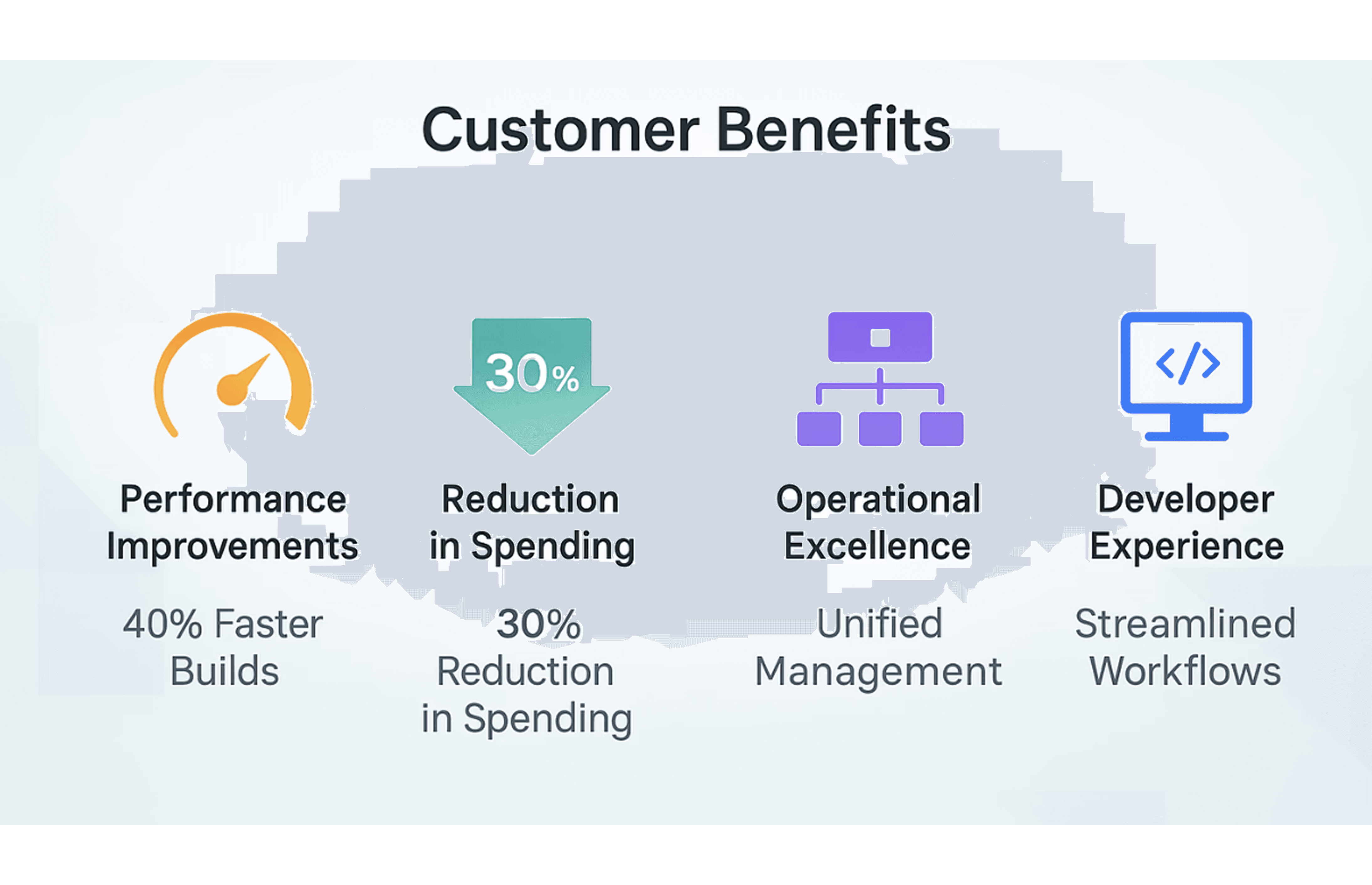
By migrating BigYellowFish to a modern GCP CI/CD framework, we delivered significant improvements across four key areas:
1. Performance Improvements
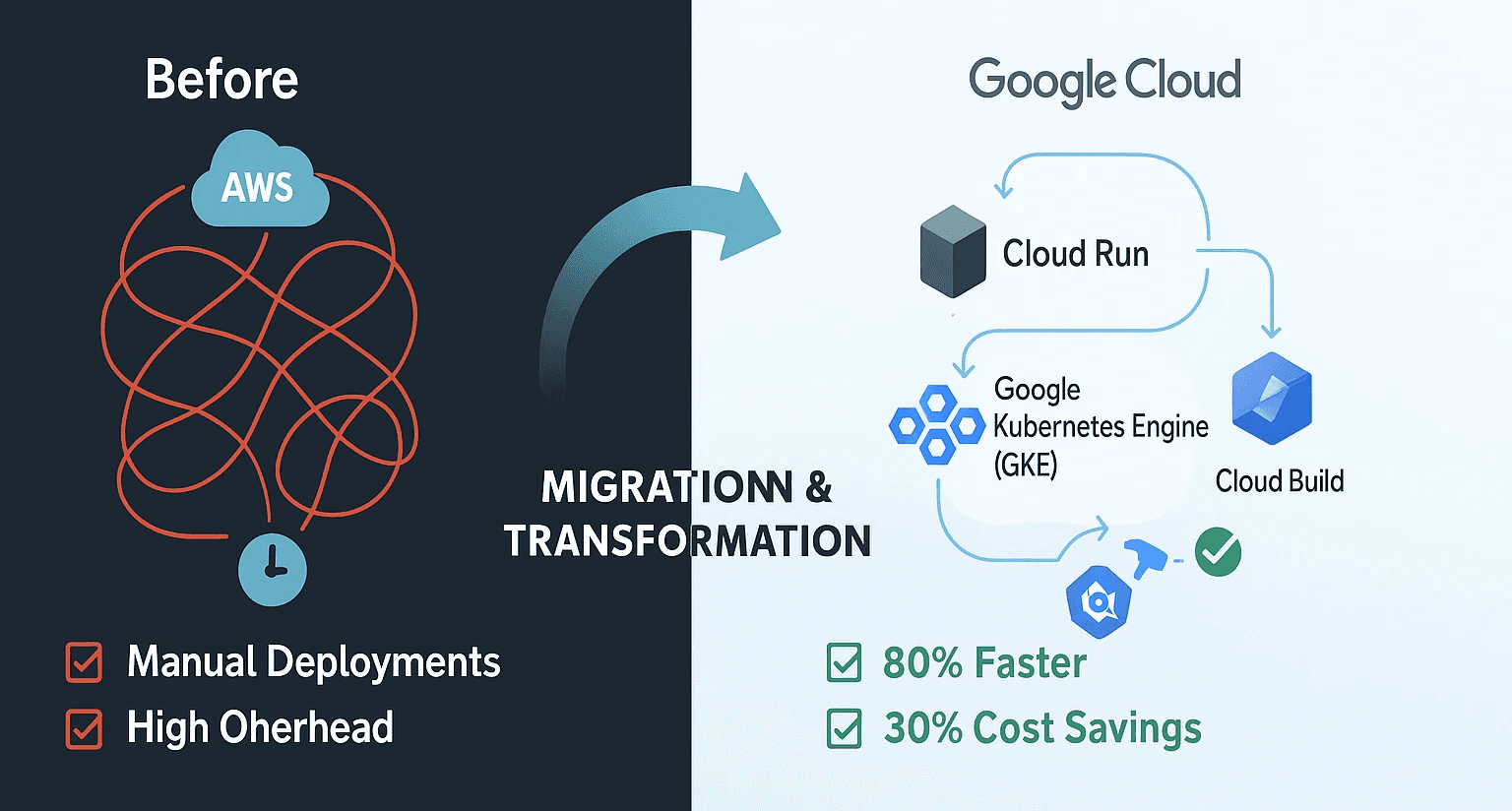
40% Faster Builds: Reduced deployment time from approximately 20 minutes to just 10 minutes per application.
Zero-Downtime Deployments: Achieved seamless rolling updates across all 12 applications, eliminating service interruptions.
Reduced Latency: Optimized GCP infrastructure delivered efficient resource allocation, resulting in lower application latency.
2. Cost Optimization
30% Reduction in Spending: Realized a 30% reduction in overall infrastructure spending compared to the legacy AWS setup.
Efficiency Gains: Eliminated manual intervention costs through full automation and leveraged efficient resource utilization with Managed Instance Group (MIG) auto-scaling policies.
3. Operational Excellence
Unified Management: A single, central orchestration framework now manages all 12 independent applications, simplifying operations.
Instant Recovery: Automated rollback capabilities ensure rapid failure recovery and system stability.
Enhanced Observability: Centralized logging and real-time deployment tracking provide clear oversight and diagnostics.
4. Developer Experience
Streamlined Workflows: Developers now benefit from standardized CI/CD processes across all application types.
Faster Time-to-Market: Accelerated deployment cycles enable the rapid and reliable delivery of new features.
Result
BigYellowFish's entire application portfolio was successfully modernized on GCP, establishing a scalable, cost-effective CI/CD framework. The solution achieved complete automation parity with the legacy AWS setup while providing 40% faster deployments, 30% cost savings, and zero-downtime reliability across all business-critical applications.