


Cloud Migration and CI/CD Automation on Google Cloud | Pulse Energy
Company Overview: Pulse Energy
Pulse Energy is a digital energy management platform that helps businesses monitor, analyze, and optimize energy usage using data-driven insights.
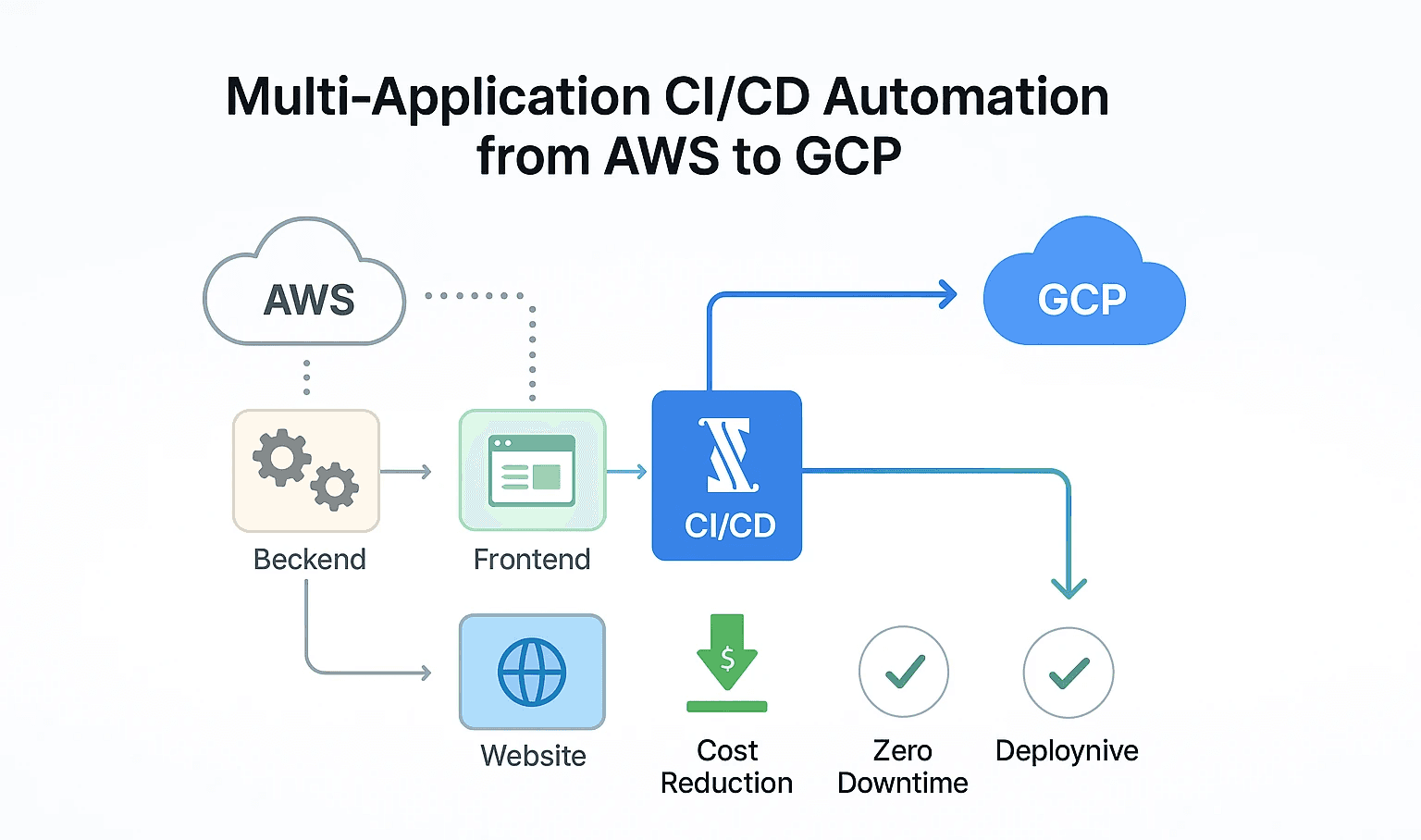
The company's platform, initially built on AWS, powered multiple microservices for analytics, user dashboards, and real-time data processing. As their workloads scaled, operational challenges in deployment speed, resource efficiency, and maintenance grew. To create a modern, scalable foundation, Pulse Energy migrated its entire infrastructure from AWS to Google Cloud Platform (GCP), enabling full automation, robust scalability, and simplified DevOps workflows.
The Problem: The Limits of Legacy AWS
The existing AWS environment, characterized by manually managed resources, created significant operational friction that limited the engineering team's ability to scale and innovate.
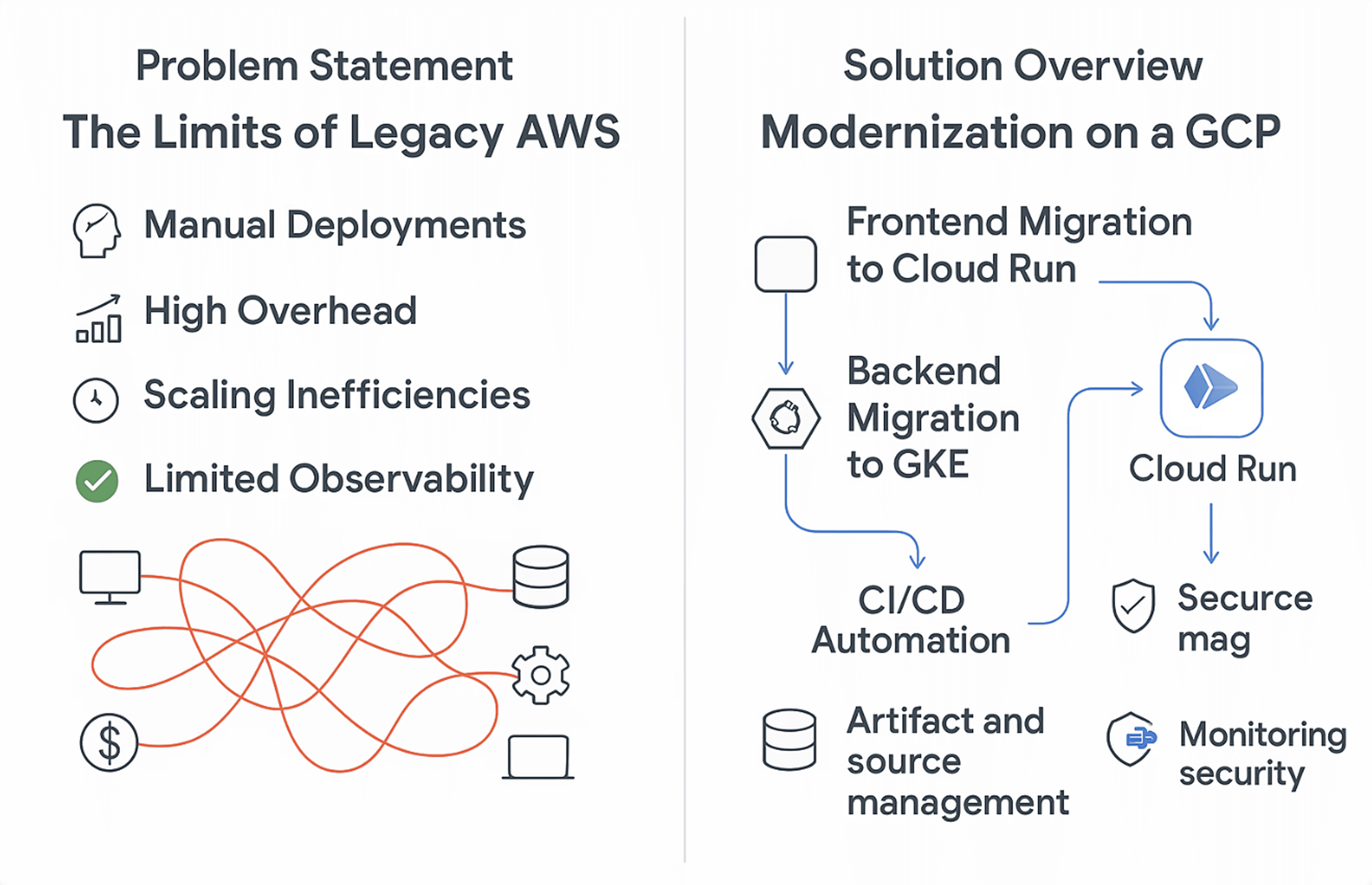
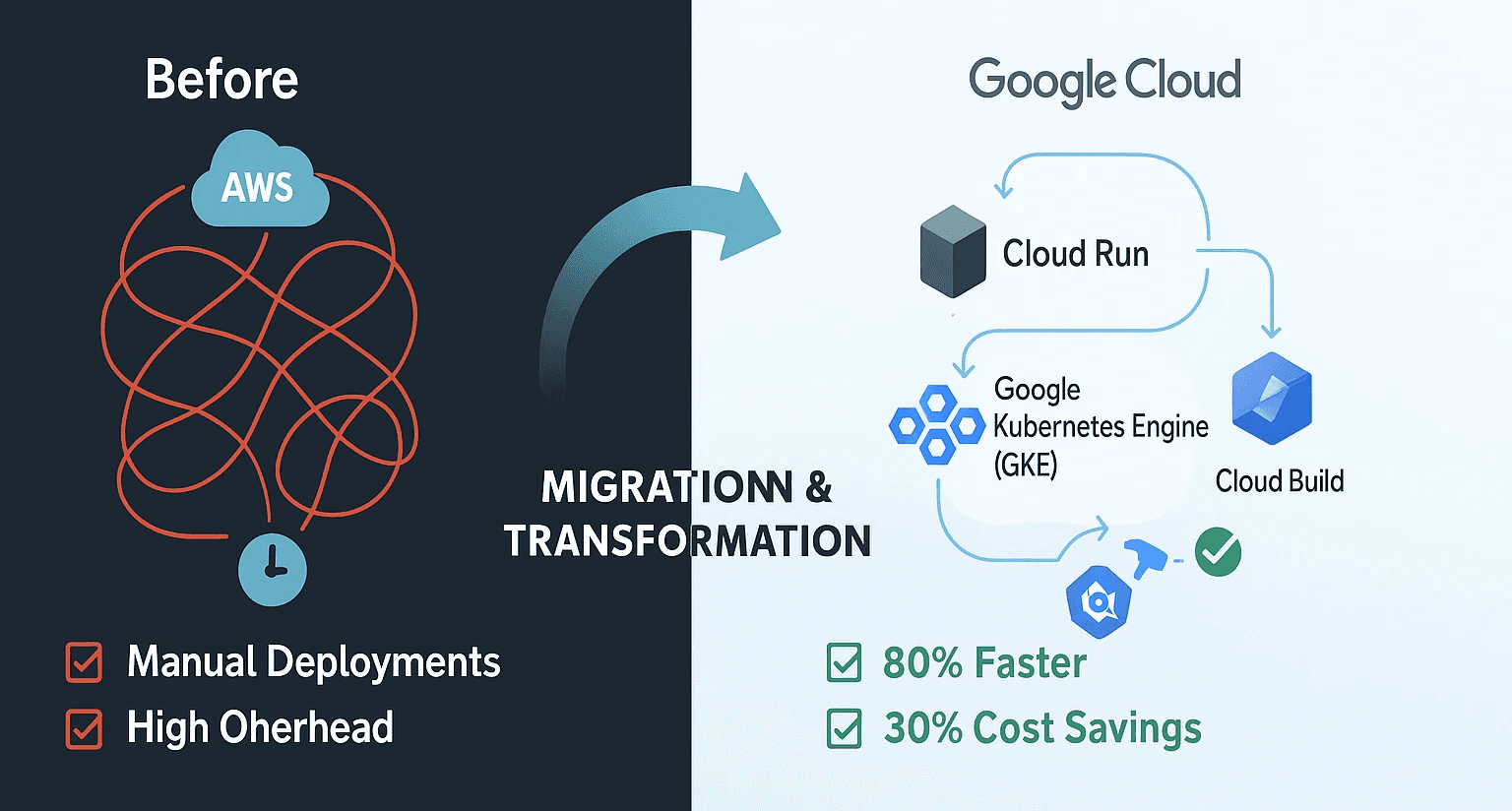
Manual Deployments: The absence of CI/CD pipelines meant updates required manual intervention through EC2 and the Command Line Interface (CLI), leading to slow, error-prone releases.
High Operational Overhead: Managing multiple EC2 instances and containers manually consumed excessive time and resources for maintenance, diverting focus from core development.
Scaling Inefficiencies: Services struggled to handle traffic spikes efficiently, impacting performance during peak usage.
Limited Observability: Troubleshooting and rollout monitoring were fragmented, making it difficult to maintain a reliable service and quickly identify issues.
Cost and Maintenance Concerns: Continuous, unoptimized resource usage without automation led to increasing and unpredictable operational expenses.
The Goal: Modernize the infrastructure by migrating to key GCP services, dramatically improving automation, enhancing scalability, and reducing overall costs.
Objectives
The project was defined by clear, measurable objectives to transform Pulse Energy's development and operations:
Automation: Build a comprehensive CI/CD automation pipeline for continuous integration and deployment.
Migration: Migrate workloads from AWS to high-performance, managed GCP services: Cloud Run (frontend) and GKE (backend).
Optimization: Optimize infrastructure for long-term scalability, cost efficiency, and reliability.
Productivity: Enhance developer productivity by providing automated, self-service builds and deployments.
Governance: Establish unified monitoring, centralized logging, and enhanced security across all environments.
Solution Overview: Modernization on GCP
The migration plan was built on three core pillars - modernization, automation, and scalability- leveraging GCP's serverless and managed services.
The Modernized Architecture
Frontend Migration to Cloud Run: The frontend application was containerized and deployed on Cloud Run. This provided a fully managed, serverless environment with automatic scaling down to zero and minimal maintenance overhead.
Backend Migration to GKE (Google Kubernetes Engine): Backend microservices were deployed in GKE clusters, enabling enterprise-grade container orchestration, declarative configuration, and robust rolling updates.
CI/CD Automation using Cloud Build: A complete, event-driven CI/CD pipeline was implemented using Cloud Build, automating build, test, and deploy processes triggered by code commits.
Artifact and Source Management:
Cloud Source Repositories were used for centralized and version-controlled code management.
Artifact Registry provided secure, private storage and versioning for all container images.
Monitoring and Security Enhancements: Integrated Cloud Logging, Monitoring, and Error Reporting established a unified platform to track application health and quickly pinpoint issues. IAM policies ensured fine-grained, secure access control across all services.
Migration Approach
Pulse Energy followed a systematic, phased approach to ensure a seamless migration with zero production downtime.
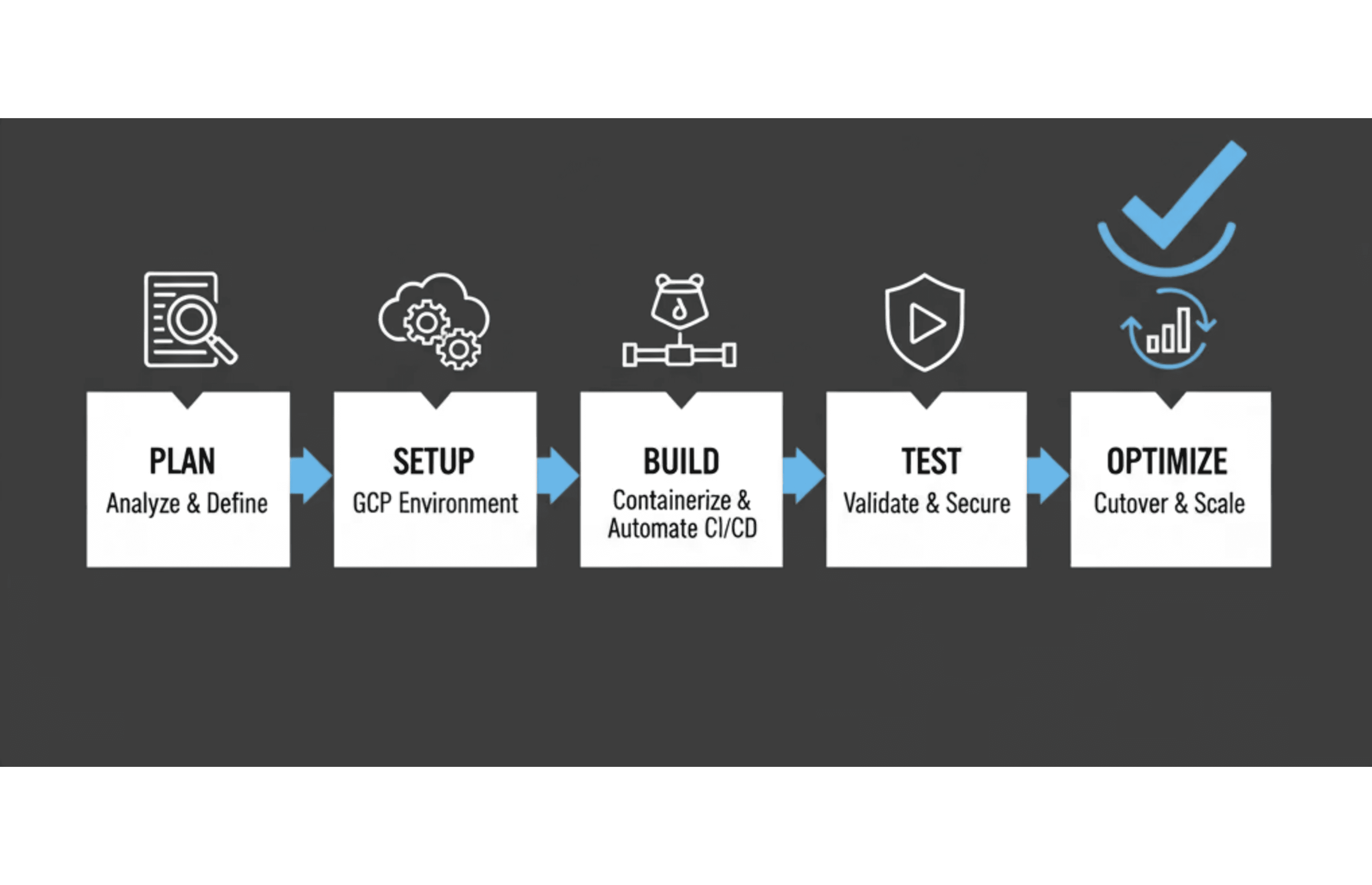
Assessment & Planning: Analyzed existing AWS workloads, deployment scripts, and dependencies. Identified architectural gaps and compatibility requirements for the new GCP environment.
Environment Setup: Created segregated GCP projects for Dev, UAT, and Production. Configured foundational services, including VPCs, IAM roles, Cloud NAT, and enabled necessary APIs (Cloud Run, GKE, Cloud Build).
Containerization & Pipeline Setup: Converted all frontend and backend code into standardized Docker containers. Configured Cloud Build triggers to automate the deployment process from source to Cloud Run (frontend) and GKE (backend).
Testing & Validation: Thoroughly verified the complete CI/CD flow, environment isolation, and rollback functionality. Conducted comprehensive performance testing and security checks before go-live.
Cutover & Optimization: Performed the final production cutover with no downtime. Post-migration, optimized GKE autoscaling rules and Cloud Run concurrency settings for ongoing cost-effective performance.
Key Challenges and Resolutions
|
Results and Outcomes
The migration to Google Cloud was a fundamental success, delivering immediate and measurable improvements across the entire software development lifecycle.
80% reduction in deployment effort through fully automated CI/CD pipelines.
Release cycle accelerated: Deployments are now completed in minutes instead of hours.
30% cost optimization achieved by eliminating EC2 overhead and adopting highly efficient, managed, and serverless services.
Improved Scalability with Cloud Run and GKE autoscaling features, reliably handling any traffic spike.
Enhanced Reliability and Visibility through integrated Cloud Monitoring and Logging.
Higher Developer Productivity: Teams now focus entirely on innovation and new features, rather than manual maintenance and debugging.
Conclusion
The Pulse Energy migration from AWS to Google Cloud successfully modernized the company’s infrastructure and fundamentally transformed its DevOps capabilities. By strategically integrating Cloud Build, Cloud Run, and GKE, Pulse Energy achieved:
Fully automated, reliable CI/CD pipelines
Faster and error-free deployments
Significant improvements in scalability and cost efficiency
Centralized monitoring and governance
This project established a robust, future-ready cloud architecture, positioning Pulse Energy to scale rapidly, deploy confidently, and innovate continuously on GCP.